Author conversations

Bring THE PROVIDENCE to your table.

Explore character, choices and relationships with your book club, library, community group or faith community. Invite Quinlan Motley to join the conversation.

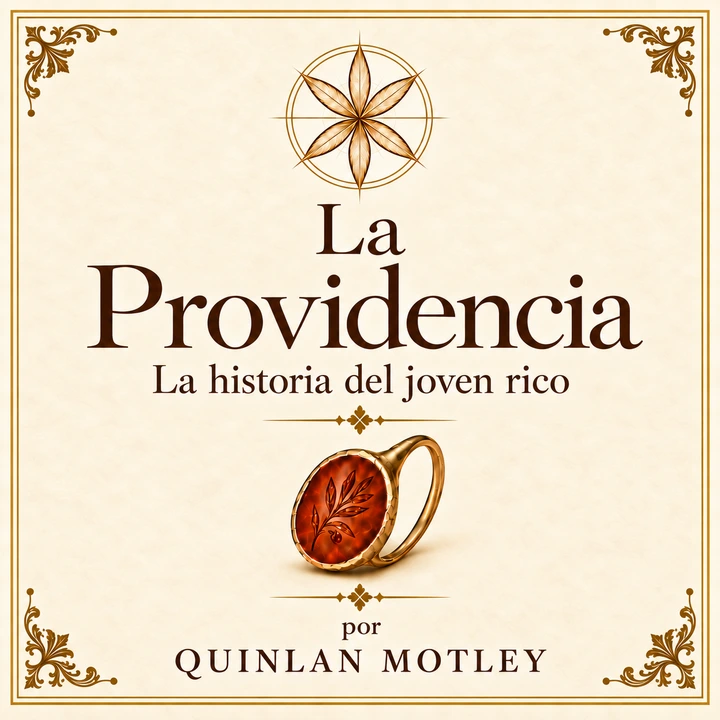
Cover of THE PROVIDENCE by Quinlan Motley

Book Club edition

A compact novel. A lasting conversation.

THE PROVIDENCE gives a reading group more than one honest position to hold at once. The ruler’s work feeds people. His wealth protects his family. His judgment is often fair. His need to remain responsible for every outcome is also becoming a form of control. The novel does not ask a group to flatten those truths into a slogan.

It asks the better question: what does it mean to surrender when the thing you hold is capable of doing real good?

About 3 to 4 hours. The novel’s prologue, three parts, and fifteen brief chapters create natural stopping points.

Accessible reader resources

Read online or keep a polished copy.

The complete guides appear below as accessible HTML. The two discussion guides also have tagged PDF editions. The Book Club and guest guide combines ten questions, book details and author conversation information.

Spoiler free guide

Begin without deciding the book in advance.

Before he was remembered as the rich ruler who ran to Jesus, he was a hungry boy in Jericho. He becomes a merchant and trusted community decision maker by seeing risks other people miss and insisting on fair measures. His wealth creates work, feeds households, and protects the people he loves. It also gives his fear more to manage. When reports of Jesus reach the city, he goes carrying a question no account can settle.

Why it works for discussion

  • The protagonist is morally serious and generous before Jesus speaks to him.
  • Work, wealth, and responsibility are shown from several social positions.
  • The novel distinguishes helping people from deciding for them.
  • Scripture fixes the central encounter while leaving the man’s biography and aftermath unknown.
  • The story’s most important relationships can be read differently without reducing any character to a symbol.
  • The ending preserves uncertainty rather than issuing a salvation verdict.

Before reading

Use three or four prompts before the group begins. There is no need to reach agreement.

  1. When you hear the phrase the rich young ruler, what assumptions do you make about the man before rereading the Gospel accounts?
  2. What responsibilities in an ordinary life can make uncertainty especially difficult to accept?
  3. Where is the line between caring for someone and deciding what safety should look like for them?
  4. Can generosity and control exist in the same action? What would distinguish them?
  5. What does historical or biblical fiction owe its source text when the source leaves a person’s life mostly unknown?
  6. How should a novel signal the difference between imaginative possibility and a claim about history?
  7. Is wealth morally different when it was built through honest work and is actively used to help other people? Why or why not?
  8. What do you expect the detail Jesus looked at him and loved him to change about the encounter?
  9. When does careful preparation become an attempt to eliminate the need for trust?
  10. What would make a difficult command feel more demanding: contempt from the speaker, or love?

How to host the conversation

  1. Put the hardest question in the center rather than beginning with a verdict.
  2. Ask participants to name the scene that supports their reading.
  3. Let two apparently conflicting truths remain true long enough to examine both.
  4. Distinguish what the Gospels say, what the novel invents, and what a reader infers.
  5. Do not require anyone to disclose finances, religious history, or private spiritual experience.
  6. End by asking what question each reader is still carrying, not what answer the group approved.

Contains ending spoilers

Full discussion guide

Do not place these questions in page previews, social captions, event invitations, or visible search excerpts.

Character and formation

  1. The ruler first learns about hunger through the unequal division of bread. How does that early experience shape both his generosity and his fear? Where does the lesson help him, and where does it begin to govern him?
  2. His father returns grain that could have been hidden, yet the family loses its plot anyway. What does the boy learn from his father’s integrity? Does the father see the outcome differently from the son?
  3. The ruler’s success grows from listening to people who know what he does not: a driver, a store worker, growers, carriers, field workers, and his wife. Why does listening remain difficult even after it becomes one of his strengths?
  4. The wife repeatedly refuses to let him make risk disappear on her behalf. What does she understand about shared life that he does not? Which of their conversations changes him most?
  5. The ruler tries to give his father rest, but his father asks for chosen work. What is the difference between providing for someone and making that person unnecessary?

Work, wealth, and power

  1. The common measure creates a form of trust that does not depend on every party liking the result. What does the novel suggest fairness requires beyond good intentions?
  2. During the shortage, the steward opens grain under a rule that limits strong buyers. The ruler stops him publicly, then reverses himself publicly. Why is the correction important? What would have changed if he had repaired the decision only in private?
  3. The ruler pays wages before securing every receipt and refuses the price of fear. Which uses of wealth in the novel are genuinely good? Does acknowledging that good sharpen or soften the Gospel command?
  4. The story repeatedly separates goods that belong to the ruler from goods entrusted to him by others. Why does that distinction matter when he hears the instruction to sell what belongs to him?
  5. After the encounter, he gives more, listens longer, and pays closer attention to people who have not spoken. Is this obedience, avoidance, growth, or some combination? What evidence supports your reading?

The encounter

  1. Before Jesus speaks the final command, the ruler feels seen without needing to defend his history. Why does the novel place such weight on Mark’s statement that Jesus loved him?
  2. The ruler forms several generous alternatives: keep the field but give its yield, open the stores wider, support Jesus’ travelers, delegate but remain close enough to correct failure. Why is each plan insufficient to him? What do the plans have in common?
  3. He recognizes that the people he loves are not empty vessels waiting for his hand, yet that knowledge does not free him to follow. Why not?
  4. The narrator insists that the good he has done is not exposed as false simply because he does not follow. How does that sentence change your reading of him? Would the story be easier if his goodness were fraudulent?
  5. Jesus does not chase him, and the crowd does not condemn him. What role does freedom play in the sorrow of the scene?

After the road

  1. His wife does not give him either acquittal or accusation. She tells him, in effect, that he heard Jesus. Is this compassion, judgment, restraint, or something else?
  2. The reports of Jesus’ arrest, death, empty tomb, and appearances reach the ruler through imperfect chains of witnesses. How does his habit of testing reports serve him? How does it become another reason to delay?
  3. The parable of entrusted money could sound like a defense of the ruler’s entire life. Why does it instead reopen his question about what has been placed in his hands?
  4. The steward, grower, and carrier choose to seek the resurrection witnesses themselves. What has the ruler successfully given them before he gives them provisions for the road?
  5. On the final morning, the ruler walks farther than he intended. What is different in him while he walks beside the others? What remains unchanged when his pace shortens?
  6. Discuss the final transfer of the lead rope. Is the ruler releasing the travelers, releasing control, declining discipleship again, or doing more than one of these at once?
  7. The final bread is still in his hand when he turns home. Trace the bread motif from the first chapter to the last sentence. What has he learned to give? What has he not yet released?
  8. Scripture does not tell us what became of the ruler. The novel refuses to declare a salvation verdict. What does that refusal make possible for the reader?
  9. What does the title THE PROVIDENCE mean by the end? Where, if anywhere, does Providence appear in the events rather than in the ruler’s explanation of them?

Continue the conversation

01

Read first.

Begin with the complete approved Prologue in the GoodNovels.org Book Sample.

02

Choose locally.

Select a verified reader market and format with no silent United States fallback.

03

Invite the author.

Request a live conversation for a Book Club, Church, class, library, or community group.